

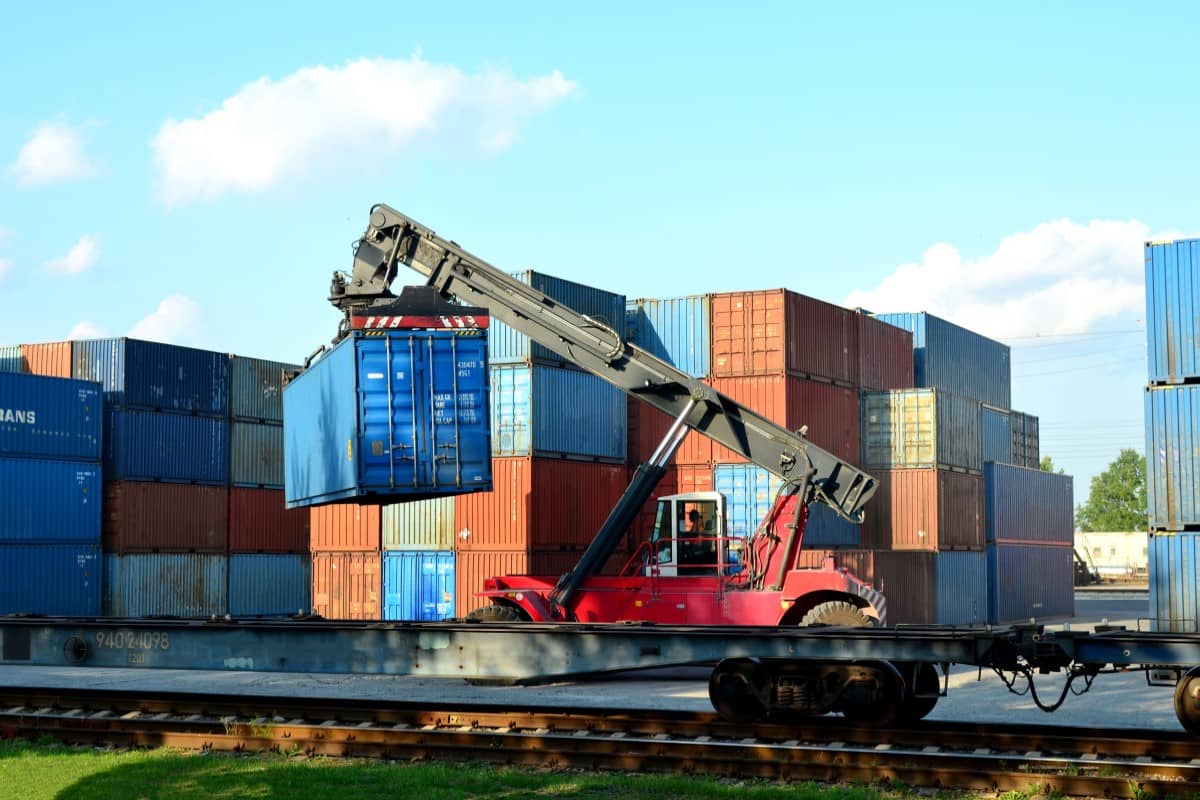
- Transload facility
- Memphis, TN
- Documented
- Rail-served · CN (documented)
- Proximity
- Interstate · 3 mi (proximity only)Intermodal terminal · 7 mi (proximity only)
Example: how a facility's documented railroad and proximity context are labelled.
Find Class I, regional, and short line railroads and explore the freight locations, connections, and services associated with their networks.
Freight may move directly on one railroad or pass between multiple railroads before reaching its destination. Understanding the serving railroad, connecting carriers, and interchange relationships helps explain how a location fits into the broader rail network.
The short line or regional railroad serves the location directly. The Class I is a connecting railroad through a documented interchange.
The Class I railroad has the documented serving relationship with the location.
A regional or short line serves the location and connects outward to the broader network.
All three patterns are valid. A location's serving railroad can be a Class I, a regional, or a short line.
Search and explore railroads by name, reporting mark, railroad type, and geography.
Showing 12 of 635 railroads
Classification and reporting marks come from Commtrex railroad records. Connections appear only where documented in the AAR Rule 260 junction registry. Geography is where a railroad owns track in FRA rail network data.
Explore railroad networks alongside freight locations, transload facilities, terminals, rail services, and industrial properties.
Class I railroads operate major long-distance networks connecting industrial markets, ports, terminals, regional railroads, short lines, and freight locations across North America.
Regional and short line railroads connect industrial locations, communities, terminals, and Class I networks across North America. For many freight locations, they are the railroad providing the direct service.
The serving railroad is the railroad with the documented relationship to the location, not necessarily the largest or closest railroad on the map.
Explore regional & short line railroads →Interchange relationships help freight move between railroad networks. Where documented, Commtrex can distinguish railroad connections from rail lines that are simply nearby or cross geographically.
Freight can move between the two networks at this documented connection.
PROXIMITY / GEOMETRY DOES NOT ESTABLISH INTERCHANGE
Two rail lines crossing on a map does not prove that freight can interchange between them.
Follow a railroad to transload facilities, terminals, storage locations, rail services, and other freight locations represented in the Commtrex network.
Rail-to-truck and truck-to-rail transfer
Served by · documentedFreight handling and terminal operations
Served by · documentedOperating storage locations where rail relationships are documented
Served by · documentedRepair, maintenance, and operational support
Served by · documentedExplore transload facilities with documented railroad relationships and understand the rail and highway networks surrounding each location.
Explore transload facilities →Example: how a facility's documented railroad and proximity context are labelled.
Search industrial land, warehouses, manufacturing properties, terminals, and logistics properties where railroad service is documented.
Rail-served means a documented service relationship, not simply a railroad located nearby.
Find railcar repair, maintenance, consulting, operations, and other service providers represented across the Commtrex network.
Providers are listed as represented in Commtrex. A listing does not mean a provider is endorsed, verified, or affiliated with a railroad.
Move from railroad exploration into a specific freight requirement and identify providers positioned to support the move.
Commtrex helps railroads and rail-service providers present accurate company, location, service, and network information to companies evaluating freight options.
Commtrex represents Class I, regional, and short line railroads across the North American freight network. Coverage and available information vary by railroad and geography.
A short line is a freight railroad that generally operates over a smaller geographic network than a Class I railroad. Short lines often provide the direct rail connection between industrial locations and the broader rail network.
Not necessarily. Geographic proximity does not establish rail service. Where available, Commtrex distinguishes documented serving relationships from railroads that are simply nearby.
No. Rail infrastructure such as track, a siding, spur, or rail door does not by itself establish active railroad service.
An interchange is a location or relationship where freight can move between railroads. Two rail lines crossing geographically does not by itself establish an interchange relationship.
Where railroad relationships are documented, users can explore transload facilities and other freight locations associated with specific railroads.
Yes. Commtrex Industrial Real Estate includes rail-served property discovery where railroad service is documented separately from simple rail proximity.
Railroad exploration can help identify relevant freight locations and providers. Users with a specific freight requirement can continue into Find Capacity to pursue rail-connected service options.
Explore Class I, regional, and short line railroads alongside freight locations, connections, services, and rail-served industrial properties across North America.