Transloading

Find transload facilities

Search rail-served transfer capacity across the US, Canada, and Mexico by state, city, or keyword.

Or search by location + radius
EnviroTech Services
Rail-served capacity in 16 states — 40+ terminals
Request Capacity →

Rail access

Every Class I railroad

Facilities across our network connect to all six Class I railroads, so shippers reach transload capacity anywhere in North America.

The network

Facilities across the US, Canada, and Mexico, matched to what your freight needs

Commtrex indexes transload facilities across North America. Whether you move dry bulk, liquid bulk, or dimensional freight, you can find providers with the equipment, capacity, and rail access to handle your specific commodity.

Search by location, commodity, equipment, and railroad access to identify the right partner. Or submit one request and matched providers respond with competitive offers — so you compare pricing, capability, and availability in one place.

View top 10 transloading companies →

One request

Send one request. Compare offers from multiple providers.

Instead of calling facilities one at a time, describe your freight, your origin and destination, and the services you need. Matched providers review the request and respond with competitive offers you can compare side by side.

Commodities handled

Dry bulk
Chemicals
Food grade
Liquids
Lumber
Oversized loads
Packaged goods
Steel
Transloading business communication

Receive offers and negotiate directly

Once you submit, providers in the matching area review your requirements and respond with detailed offers. Compare pricing, capability, equipment, and timeline — then negotiate directly through Commtrex.

No cold-calling facilities, no outdated directories. You get direct access to verified transload providers ready to handle your freight.

Reference

Transloading FAQs

What is transloading?
Transloading is the process of transferring freight from one mode of transportation to another — for example, from rail to truck, truck to rail, or between different types of railcars and containers. Transload facilities serve as the critical link that enables shippers to take advantage of the cost efficiency of rail transportation even when their origin or destination does not have direct rail access.
What type of freight can be transloaded?
Nearly any type of freight can be transloaded, including dry bulk commodities (sand, grain, aggregates), liquid bulk (chemicals, petroleum products, food-grade liquids), dimensional freight (lumber, steel, machinery), and containerized goods. The specific capabilities depend on the equipment and infrastructure available at each transload facility.
What is dry bulk transloading?
Dry bulk transloading involves transferring loose, granular, or powdered materials between transportation modes. Common dry bulk commodities include sand, gravel, cement, grain, fertilizer, and minerals. Facilities handling dry bulk typically use equipment such as conveyor systems, pneumatic blowers, front-end loaders, and specialized hoppers to efficiently move material between railcars and trucks.
What is liquid bulk transloading?
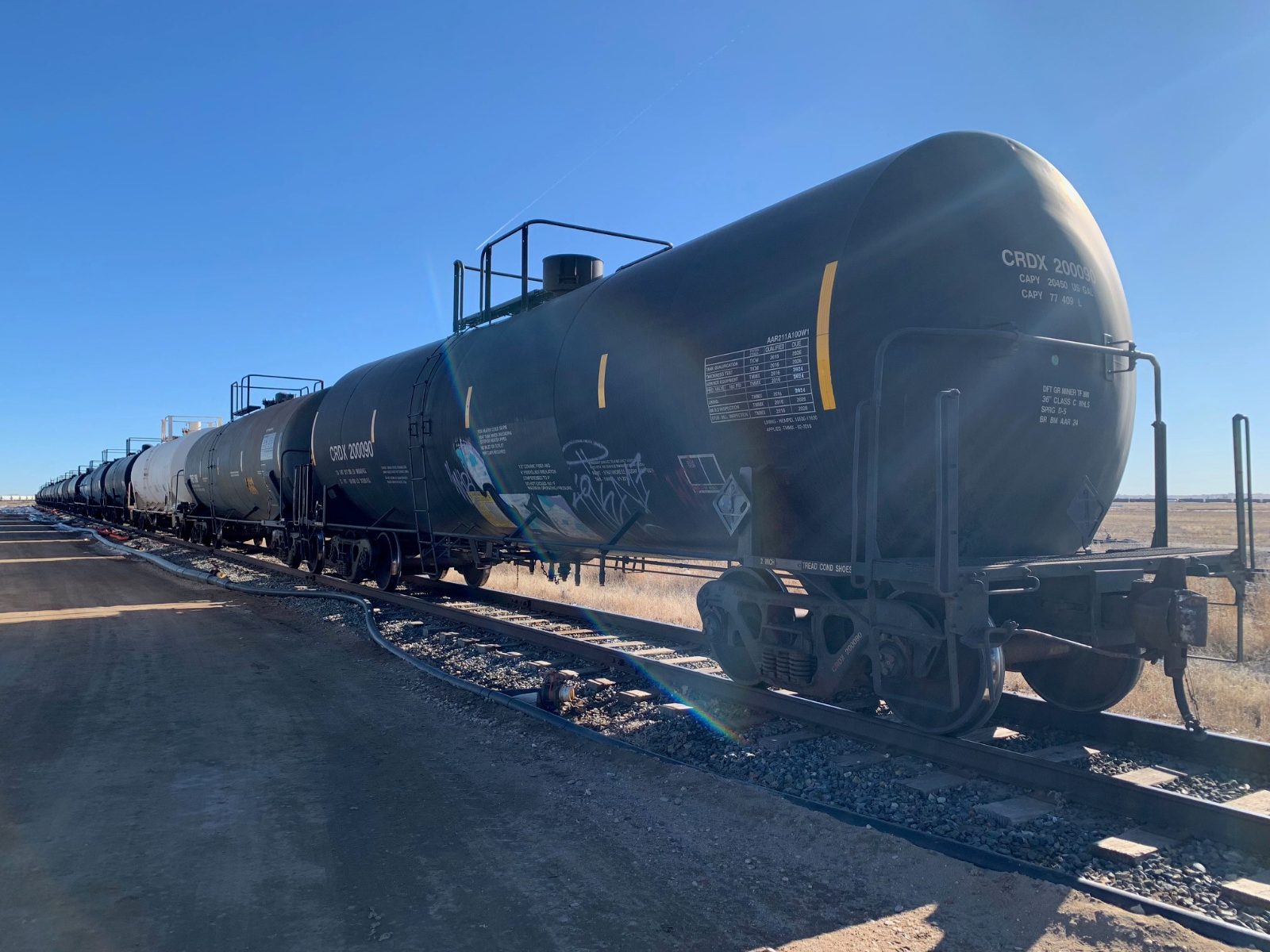
Liquid bulk transloading is the transfer of liquid commodities — such as chemicals, petroleum products, vegetable oils, and other liquids — between tank cars, tank trucks, and storage tanks. These facilities require specialized pumping equipment, containment systems, and often hazmat certifications to safely handle liquid freight.
What is dimensional transloading?
Dimensional transloading refers to the handling of large, heavy, or irregularly shaped freight such as lumber, steel coils, pipe, machinery, and construction materials. These loads often require cranes, forklifts, or specialized rigging equipment to transfer between flatcars, gondolas, and flatbed trucks.
What is container transloading?
Container transloading involves transferring goods from intermodal shipping containers to domestic trailers or vice versa. This is commonly done at port areas or inland intermodal facilities where international containers are deconsolidated and reloaded into 53-foot domestic trailers for final delivery.
What is the difference between transloading and cross-docking?
While both involve transferring freight, transloading specifically refers to moving goods between different transportation modes (e.g., rail to truck), often involving bulk commodities and specialized equipment. Cross-docking typically involves transferring packaged goods between trucks at a warehouse or distribution center with minimal storage time. Transloading usually requires more specialized equipment and handling.
What are the benefits of transloading?
Transloading offers several key benefits: lower transportation costs by leveraging rail for long-haul moves, access to rail service even without a rail siding, greater flexibility in shipping and receiving locations, reduced truck traffic and environmental impact, the ability to consolidate or deconsolidate shipments, and access to temporary storage at the transload facility. For many shippers, transloading is the most cost-effective way to move bulk commodities across long distances.
85%
of Transload Sites in North America
48,000+
Facilities in Our Network
6 of 6
Class I Railroad Partners

Browse by State / Province

United States

Canada

Mexico

Post the requirement. Let providers respond.

Submit one request and matched transload providers come to you with competitive offers.

Browse transload facilities by State / Province